One Step Now Education
June 5, 2026
cashaw
No, it’s not a nut.
On Thursday, May 28th, 14-year-old Shrey Parikh correctly spelled this word to become the champion of the 2026 Scripps National Spelling Bee.
But what is a cashaw?
Not only will we find out why this word is spelled the way it is, we will take a look at indigenous languages and the words they bring to our lexicon. We’ll learn how languages adopt and adapt words. We’ll take a look at how some digraphs have place value, including the digraph <aw>. Of course our old friend schwa will be there to help us understand the variant spellings for this word. But first let’s go back to our question.
“What is a cashaw?”
Meaning
What is this word’s meaning and how does the word function?
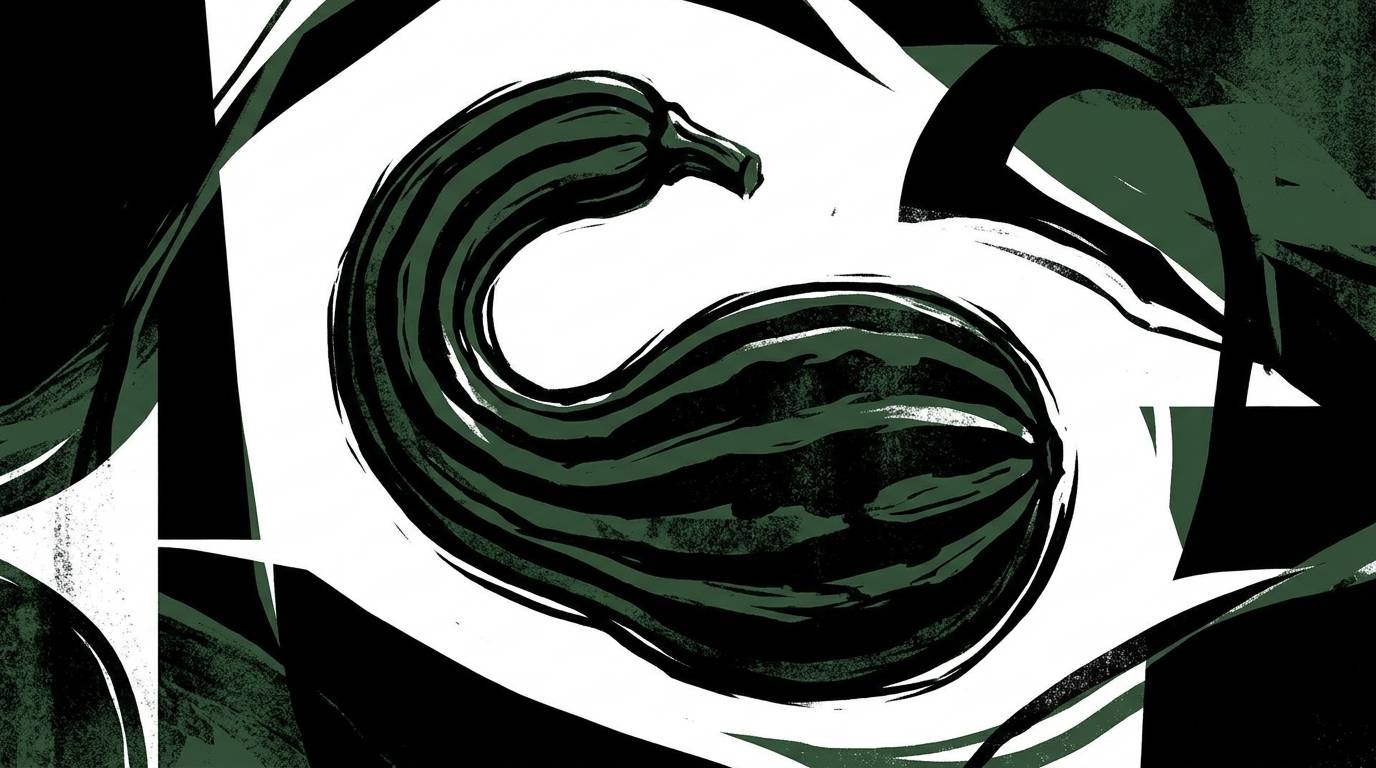
The Collins entry for cashaw says it is a “North American variety of pumpkin or squash.” It then says it is an alternative spelling of cushaw. When I put those terms into a Google image search, I get the following:
I’ve seen these in various fall tablescapes and baskets, simply referred to as squash. Curious to learn more, I visited Martha Stewart’s website where I learned a cushaw is typically cultivated in the Southwestern United States and Mexico. It is a winter squash that has been cultivated since 7000 BC. Other names include “sweet potato pumpkin” and “crookneck pumpkin.” They are often prepared in the same manner as sweet potatoes or butternut squash.
Structure
What are the elements that make up this word’s structure?
Given the look of the word, there appear to be no prefixes or suffixes.
We typically look for the history of word in the Online Etymology Dictionary, but Etymonline offers no entry. Wiktionary tells us the word may have derived from a Native American language, but that it’s unsubstantiated. The Oxford English Dictionary suggests that language is Carolina Algonquian but also casts doubt. The Algonquian language family has branches that extend into a large portion of Canada, along the Eastern Seaboard, and even some places i the West, but nowhere near the Southwestern United States. Tribes include Cree, Wampanoag, Blackfoot, and Cheyenne.
The word which caused some to think cashaw was related was spelled <coscushaw> and referred to a poisonous root. However, a cashaw is edible. See, even back then looks could be deceiving.
Relatives
What are the word’s relatives and history?
Since cashaw’s origins are uncertain, let’s use this section to explore other English words from the Native American Algonquian languages. These are not necessarily morphological or etymological relatives for cashaw.
Other foods and plants include hickory, hominy, pecans, persimmons, and succotash.
Animals include skunks, woodchucks, raccoons, chipmunk, and caribou.
Other familiar words are moccasin, wigwam, tomahawk, and powwow.
Graphemes
What can the pronunciation of the word teach us about the relationship of its graphemes and its phonology?
The first syllable contains a schwa, which is probably the reason for the alternative spellings. A schwa may be spelled with any vowel grapheme, including a digraph, like in the word curious, where the <ou> vowel digraph is spelling schwa.
When this word first entered our lexicon in the 1600s, the Algonquin languages were still primarily unwritten. That process didn’t begin until European contact sometime in the 1700s. Languages adopt and adapt. When a language borrows, or adopts, a word from another language, it will often adapt the orthography of the word to match its own spelling system. Over the course of its history, Oxford has attested the following forms: coshaw, cusha, cushaw, cashaw, kershaw, and the non-standard crushaw.
The vowel digraph <aw> is a variant of the vowel digraph <au>. They are positionally constrained, or as we sometimes say, they have place value. Typically, the <aw> form will be found final to a base, but it can appear prior to a <k> (hawk), <l> (shawl), or <n> (lawn). We see a similar pairing with the digraphs <ou> and <ow>.
Next Steps
What concepts from this investigation can we explore next to learn more about the English orthographic system?
What other words can we find from Native American origins?
The origins of food words might be an interesting exploration.
You could go further into the vowel digraphs <au> and <aw>. Are there other pairs like this that have place value? (Big Idea #10)
This year’s competition came down to a spell-off. This rule was instituted post-pandemic to combat a situation where there were multiple winners in a year. In 2019, there were nine winners who shared the prize. In the spell-off, a contestant has ninety seconds to spell as many words accurately as they can. The winner, Shrey Parikh, was able to spell 32 words in that time. The runner-up, Ishaan Gupta , spelled 25.
Parikh was third place in 2024, and illness kept him from participating in 2025. This year’s win, in his last year of eligibility, made for a wonderful comeback.
Other words from the competition include kadohadacho (a Native American tribe), quillai, (a soap made from bark) and Quincke tube, (a glass tube sounded by blowing across the top that is used for obtaining high notes.
Stay curious,
Brad
PS. Each year we investigate the words that determine the winner of the National Spelling Bee. These words include moorhen (2022), psammophile (2023), abseil (2024), and last year’s eclaircissement. You can find those and 200 more word investigations archived in the Creating English Orthographers (CEO) community, my subscription-based community for practitioners of scientific word study. Sign up at the link below my picture.
PPS. And in case you were interested, the word cashew was a shortening of French acajou which came from Portuguese acaju. The Portuguese got their word from the indigenous Tupi language of Brazil. The acajuba is the tree that produces the cashew fruit.
One Step Now Education
600 1st Ave, Ste 330 PMB 92768, Seattle, WA 98104-2246
Unsubscribe · Preferences

Leave a Reply