One Step Now Education
July 3, 2026
colonization
As the States are headed into their Independence Day weekend, I began thinking about this word. A few months ago I was consulting with a teacher, and she was noticing connections to words from another morphological family that were interesting. I thought I’d investigate this word to share those connections with you.
This word will come alive in more than just history books as we investigate its meaning, structure, relatives, and graphemes. We’ll pick up with pluralization and how sometimes we have to do a little toggling before we do. We’ll also cruise by stems, allomorphs, and suffixal constructions to assist in our understanding. After visiting the wider etymological family, we’ll cruise by our old friend schwa before leaving.
Meaning
What is this word’s meaning and how does the word function?
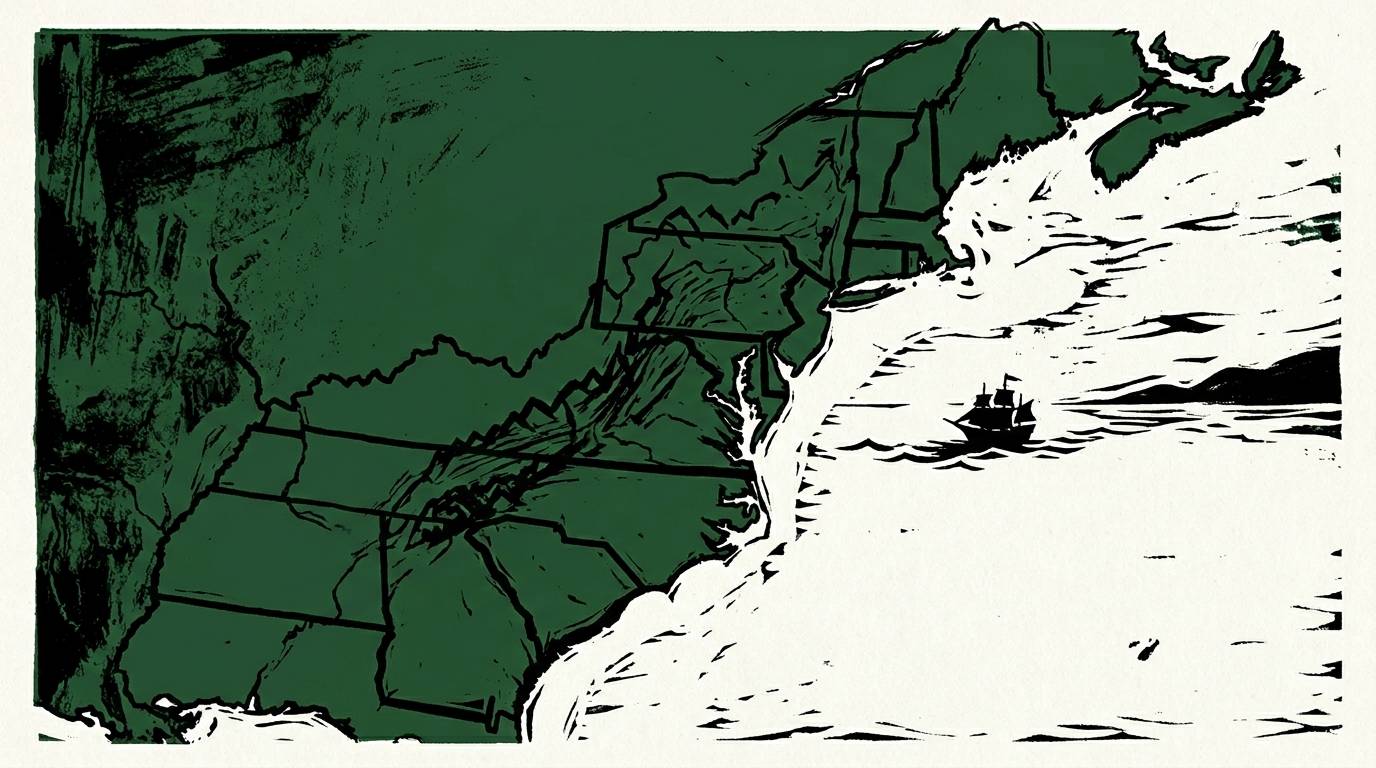
The first American settlement by the British nation was the “Lost Colony” of Roanoke. Established in 1585, this settlement was found abandoned a few years later. What happened to the colonists there remains unknown. The first permanent settlement was Jamestown, Virginia in 1607, thirteen years before the Pilgrims settled in Plymouth.
A colony, according to the online Collins dictionary entry, is a country “controlled by a more powerful country.” It may also be “the place a particular group of people live.” There may be an artists’ colony or an industrial colony.
As a noun, this word may be pluralized as colonies. Notice the toggle between the <y> at the end of colonyand an <i> in its place in the plural colonies. We call this toggling, and it happens when the <y> is no longer needed. See, there is a convention that no complete English content word ends in <i>, so we substitute the <y> for it instead. Since the <y> would be in the middle of the word colonies, it was no longer needed and we toggled back to an <i> instead. Marie Foley refers to it as a “light switch,” and I’ve known some practitioners who have a labeled light switch to teach it this way.
Only nouns can be pluralized. Most nouns are pluralized by adding either <-s> or <-es> which is an allomorph of <-es>. An allomorph is a form of an element that appears in certain phonological environments. We use the <-es> either when the pluralized form will result in an additional syllable, like church/churches or exercise/exercises. In the first example, we go from one to two syllables. In the second example, we go from three syllables to four syllables. Otherwise, we simply add <-s>.
We also use the <-es> after we’ve toggled a <y> and <i>. For example cherry/cherries or baby/babies. In both of these examples, the number of syllables stays the same but we have toggled <y> to <i> to form the plural.
What about monkey?
Well that’s not a <y> in that word, but a digraph <ey>. Therefore, we simply add <-s>, monkeys.
Structure
What are the elements that make up this word’s structure?
I looked up colony in the Collins dictionary, because I knew it was a base or stem for the word colonization. A stem is a word that may be further analyzed but can also have affixes added to it to create further words
colony + ize –> colonize
colony + ize/ + ate/ + ion –> colonization
But wait a minute. In those word sums, what happened to the <y>? Is it a suffix? Otherwise it would toggle.
colon + y + ize/ + ate/ + ion
It’s time to look at Etymonline to see what’s going on with this word.
I’m going straight to the entry for colony. This word entered our language to first identify an ancient Roman settlement that was outside Italy. It’s been with us since Middle English. It is from Latin colonia, “settled land.” The Latin suffix <-ia> developed into a suffix <-y>. See suffixes have history too, and we should always attest our affixes just as we attest our base.
Hold up, though. That’s not our last “from.” The entry also says that is from colonus and even further back from the verb colere, “cultivate the land.” This is where we head into some of those relatives my teacher had found which we’ll discuss under Relatives.
cole + on + y + ize/ + ate/ + ion
I formed the base <cole> by removing the Latin infinitive suffix <-ere> from that verb colere. I was left with <col> which needed an <e> at the end to prevent doubling before a vowel suffix.
So the <-ize> suffix created the verb colonize.
And the suffixal construction <-ation> created the noun colonization. Suffixing is often used to create new word classes. Suffixes that can do this are called derivational suffixes.
Relatives
What are the word’s relatives and history?
We’ve mentioned several words throughout this investigation that could join colonization in a matrix, including colonist and colonial.
What I typically find more interesting than matrices though are the etymological relatives for the word. As my teacher shared, another related Latin word was cultus, which gives us cultivate and culture (but not occult). The Greek relative kyklos gives us cycle and encyclopedia. I love thinking about cultivating the land and how it occurs in seasonal cycles. It even gives us wheel in the English derivation.
Graphemes
What can the pronunciation of the word teach us about the relationship of its graphemes and its phonology?
The word colonization is another great example of how pronunciation may shift but the spelling of elements does not across the family. The <o> of colony is pronounced differently than the <o> of colonial.
In words that end in the suffixal construction <-ation>, made up of <-ate> and <-ion>, the stress is on the <a> in <-ation>. For a longer word like colonization, there is even a secondary stress on the first <o>. The other vowels will be schwaed. A schwa is the unstressed vowel sound.
Next Steps
What concepts from this investigation can we explore next to learn more about the English orthographic system?
Have you and your students explored toggling <i> and <y>? (Big Idea #5)
What about the derivational suffix <-ize>? What is its function when deriving new words? (Big Idea #4)
You could spin this off into other investigations for words with the bases <cult> or <cycle>. Get it? Spin.
Perhaps you and your students are at the beginning of your word study. Perhaps some of the terms and tools that I mention above have just gone over your head. You wonder when you will know it all. But just as the thirteen colonies became a strong nation over time, and just as we still search for how to be “a more perfect union,” you and your students will only get better with time and practice. And as you grow with practice, you will begin to feel your independence.
Stay curious,
Brad
PS. I recently added some resources on the historical sources of our modern-day Latin, Greek, and Old English suffixes inside my community, Creating English Orthographers (CEO). We’d love to see you inside! Subscribe today.
PPS.Although cult is derived from colere, the occult is not. Instead this word comes from a different Latin verb celare, “hide.” The association with the supernatural came about in the early 1600s.
One Step Now Education
600 1st Ave, Ste 330 PMB 92768, Seattle, WA 98104-2246
Unsubscribe · Preferences

Leave a Reply